

Gorontalo Utara
Depreciation Expense vs Accumulated Depreciation: What’s the Difference?


It helps companies avoid major losses in the year it purchases the fixed assets by spreading the cost over several years. If you must make a choice between classifying accumulated depreciation as an asset or liability, it should be considered an asset, simply because that is where the account is reported in the balance sheet. If https://www.kelleysbookkeeping.com/what-is-the-expanded-accounting-equation/ it were to be categorized as a liability, this would create the incorrect impression that the reporting entity has a liability to a third party, which is not the case. The purchased PP&E’s value declined by a total of $50 million across the five-year time frame, which represents the accumulated depreciation on the fixed asset.
The accumulated depreciation account is a contra asset account on a company’s balance sheet. Accumulated depreciation specifies the total amount of an asset’s wear to date in the asset’s useful life. Depreciation expense is recorded on the income statement as an expense or debit, reducing net income. Instead, it’s recorded in a contra asset account as a credit, reducing the value of fixed assets.
In accrual accounting, the “Accumulated Depreciation” on a fixed asset refers to the sum of all depreciation expenses since the date of original purchase. You should note that the expense recorded each time is added to the accumulated depreciation account. Thus, accumulated depreciation is an aggregation of individual depreciation expenses over time. Accumulated depreciation refers to the cumulative amount of depreciation expense charged to a fixed asset from the moment it comes into use.
Is Accumulated Depreciation Equal to Depreciation Expense?
In other words, it’s the total of all depreciation expenses incurred to date. Accumulated depreciation is a running total of depreciation expense for an asset that is recorded on the balance sheet. An asset’s original value is adjusted during each fiscal year to reflect a current, depreciated value. Depreciation expense is reported on the income statement as any other normal business expense. If the asset is used for production, the expense is listed in the operating expenses area of the income statement. This amount reflects a portion of the acquisition cost of the asset for production purposes.
Depreciation expense is the amount that a company’s assets are depreciated for a single period (e.g,, quarter or the year). Accumulated depreciation, on the other hand, is the total amount that a company has depreciated its assets to date. It is listed as an expense, and so should be used whenever an item is calculated for year-end tax purposes or to determine the validity of the item for liquidation purposes. Accumulated depreciation is not an asset because balances stored in the account are not something that will produce economic value to the business over multiple reporting periods. Accumulated depreciation actually represents the amount of economic value that has been consumed in the past. In our PP&E roll-forward, the depreciation expense of $10 million is recognized across the entire forecast, which is five years in our illustrative model, i.e. half of the ten-year useful life.
- Accumulated depreciation can be calculated using the straight-line method or an accelerated method.
- It is considered a contra asset account because it contains a negative balance that intended to offset the asset account with which it is paired, resulting in a net book value.
- Since accelerated depreciation is an accounting method used to recognize depreciation, the result of accelerated depreciation is to book accumulated depreciation.
- Therefore, there would be a credit to the asset account, a debit to the accumulated depreciation account, and a gain or loss depending on the fair value of the asset and the amount received.
- Even though accumulated depreciation will still increase, the amount of accumulated depreciation will decrease each year.
Accumulated depreciation reduces the value of the corresponding asset on the balance sheet, therefore reflecting the total depreciation expense incurred since the asset’s acquisition. Recording accumulated depreciation is a systematic process that ends up on the balance sheet. This is recorded as a contra-asset account, which is an account that offsets the value of a related asset account.
Yet, the capital expenditure (Capex) must be spread across the useful life of the fixed asset per the matching principle, i.e. the number of years in which the fixed asset is expected to provide benefits. Accumulated Depreciation reflects the cumulative reduction in the carrying value of a fixed asset (PP&E) since the date of initial purchase. As an example, let’s assume that the original cost of an asset is $20,000, and it has an accumulated depreciation of $5,000.
Is Accumulated Depreciation a Current Liability?
Start with a free account to explore 20+ always-free courses and hundreds of finance templates and cheat sheets. Because the depreciation process is heavily rooted in estimates, it’s common for companies to need to revise their guess on the useful life of an asset’s life or the salvage value at the end of it. Accumulated what is a standard margin in accounting terms depreciation depends on salvage value; salvage value is the amount a company may expect to receive in exchange for selling an asset at the end of its useful life. Get instant access to video lessons taught by experienced investment bankers. Learn financial statement modeling, DCF, M&A, LBO, Comps and Excel shortcuts.

Rather than recognizing the entire cost of the asset upon purchase, the fixed asset is incrementally reduced through depreciation expense each period for the duration of the asset’s useful life. For year five, you report $1,400 of depreciation expense on your income statement. The desk’s net book value is $8,000 ($15,000 purchase price – $7,000 accumulated depreciation). Accumulated depreciation is the total amount of depreciation of a company’s assets, while depreciation expense is the amount that has been depreciated for a single period. Depreciation is an accounting entry that represents the reduction of an asset’s cost over its useful life.
What is an Example of Accumulated Depreciation?
In accordance with accounting rules, companies must depreciate these assets over their useful lives. For example, Company A buys a company vehicle in Year 1 with a five-year useful life. Regardless of the month, the company will recognize six months’ worth of depreciation in Year 1.
Here’s a breakdown of how accumulated depreciation is calculated, the recording process and examples of practical applications. Accumulated depreciation for the desk after year five is $7,000 ($1,400 annual depreciation expense ✕ 5 years). Accumulated depreciation is a balance sheet account that reflects the total recorded depreciation since an asset was placed in service. Subsequent years’ expenses will change based on the changing current book value. For example, in the second year, current book value would be $50,000 – $10,000, or $40,000. Accumulated depreciation totals depreciation expense since the asset has been in use.
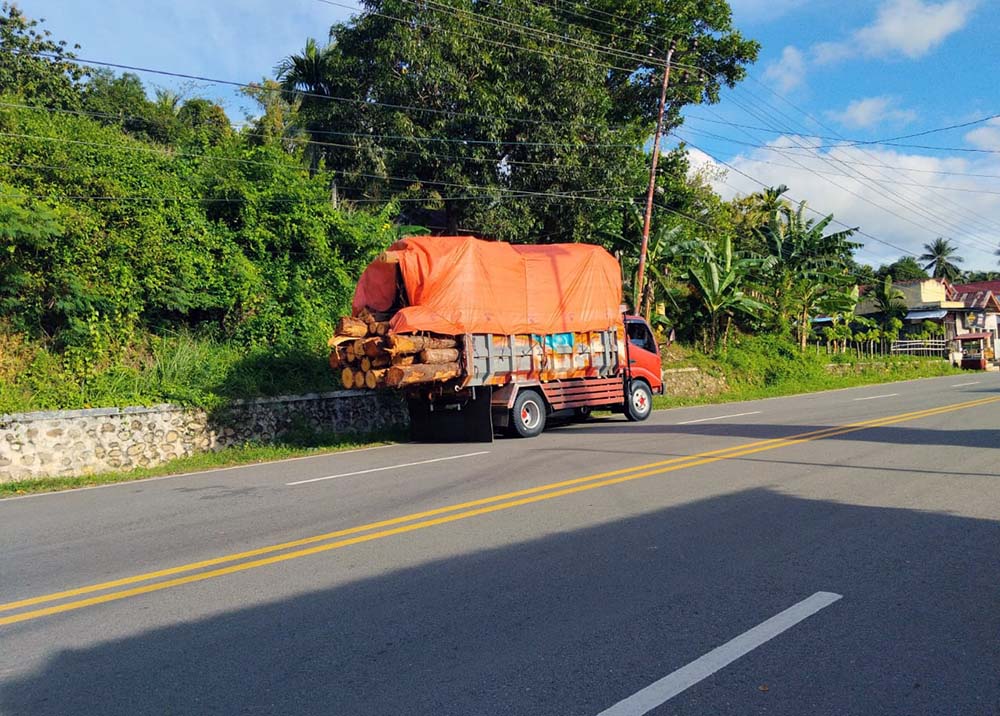


Gorontalo – Sebelas bulan telah berlalu sejak tragedi memilukan yang menimpa seorang gadis muda bernama Julia Shinta Sangala, warga Kabupaten Gorontalo Utara. Pada 2 Januari 2025, jasad Julia ditemukan oleh seorang penggembala sapi di area semak-semak sepi di Desa Ketapang, Kecamatan Gentuma Raya. Penemuan itu seharusnya menjadi awal dari proses pengungkapan kebenaran dan penegakan keadilan bagi keluarga korban.
Sehari setelah penemuan, keluarga Julia melapor secara resmi ke Polres Gorontalo Utara. Dengan harapan besar, mereka mempercayakan penegakan hukum kepada pihak berwenang agar pelaku dapat segera ditemukan. Namun, waktu berjalan begitu lama tanpa perubahan berarti dalam proses penyidikan.
Sebelas Bulan Dalam Penantian Keadilan
Kini, 11 bulan telah berlalu, dan kasus tersebut masih menyandang status “dalam tahap penyidikan”. Tidak ada perkembangan signifikan yang disampaikan kepada publik, sementara keluarga terus menunggu kepastian hukum yang tak kunjung tiba.
Dalam kurun waktu hampir satu tahun, belum ada satu pun tersangka yang diumumkan. Tidak ada kejelasan tentang arah penyelidikan maupun hasil forensik yang dapat membuka tabir misteri kematian Julia Shinta Sangala.
Bagi keluarga korban, setiap hari terasa seperti menanggung luka yang sama. Mereka bukan hanya kehilangan anak, tetapi juga menghadapi ujian panjang melawan sistem hukum yang dinilai lambat dan tidak berpihak. Keadilan yang menjadi hak dasar warga seolah menjauh dan menjadi sesuatu yang sulit dijangkau.
Potret Suram Penegakan Hukum
Kasus ini bukan sekadar catatan kriminal di Gorontalo Utara. Ia merefleksikan wajah penegakan hukum di tingkat lokal yang tengah diuji. Ketika kasus pembunuhan dengan bukti dan peristiwa jelas tak kunjung menemukan titik terang selama hampir setahun, muncul pertanyaan besar tentang efektivitas dan keseriusan aparat dalam mengusut tuntas kejahatan.
Kondisi seperti ini tidak hanya melukai hati keluarga korban, tetapi juga menimbulkan kekhawatiran di tengah masyarakat. Rakyat perlu diyakinkan bahwa hukum benar-benar bekerja tanpa pandang bulu dan tidak terhambat oleh kepentingan apa pun.

Penulis Fikran Mohzen
Seruan dan Harapan
Kasus kematian Julia Shinta Sangala adalah panggilan moral bagi semua pihak. Masyarakat, pemerhati hukum, dan organisasi sipil diharapkan ikut mengawasi jalannya penyidikan agar berjalan transparan dan akuntabel.
Polres Gorontalo Utara diminta untuk memberikan penjelasan terbuka kepada publik terkait progres kasus. Keluarga korban berhak mendapatkan kepastian, bukan sekadar janji lanjutan proses penyidikan tanpa hasil yang jelas.
Sebagai bangsa yang menjunjung keadilan, tragedi ini tidak boleh dilupakan. Nama Julia Shinta Sangala harus terus diingat, bukan hanya sebagai korban, tetapi juga sebagai simbol perjuangan akan kebenaran di tengah sistem hukum yang lamban.
Keadilan mungkin tertunda, tetapi perjuangan untuk memperjuangkannya tidak boleh berhenti.
Keadilan untuk Julia.
Penulis
(Fikran Mohzen)

Resmi Diumumkan! 1.984 Calon Mahasiswa Sukses Tembus SNBP 2026 di UNG

Sentil Pemprov! Wali Kota Gorontalo Pertanyakan Beban Anggaran MTQ Tingkat Provinsi

Korban Selamat KM. Nazila 05 Yang Tenggelam Di Perairan Maluku Utara Tiba Di Pelabuhan Gorontalo

Sikat Pungli: Wali Kota Adhan Dambea Polisikan Oknum AH Terkait Pungutan UMKM

Tuntut Transparansi: Massa Desak Inspektorat Tak “Main Mata” dalam Kasus Mafia Obat

Tak Tinggal Diam! Dugaan Pelecehan dan Pelanggaran Kerja Alfamidi Dilaporkan ke Disnaker

Dibongkar di Depan Wartawan, Ini Penjelasan Soal Rp14 M Harta Bupati Pohuwato

Meriah dengan Barongsai, Grand Opening Surya Agung Elektronik Hadir di Kota Gorontalo

HUT ke-54 Basarnas: DWP SAR Gorontalo Rayakan dengan Aksi Sosial

Ironi di Balik Program MBG: Petani Lokal Belum Dilibatkan Penuh

PKK GELAR JAMBORE PKK TINGKAT KABUPATEN GORUT

Kota Gorontalo Peringkat kedua Internet Paling Ngebutt se-Indonesia

PIMPIN RAPAT PENYERAPAN PROGRAM, BUPATI PUAS HASIL EVALUASI

PEMKAB GORUT BERIKAN BANTUAN RP. 1 JUTA/ORANG UNTUK JAMAAH CALON HAJI

Dua Kepala Desa Di copot Bupati
-

 Advertorial1 month ago
Tertib Administrasi! Pemkab Pohuwato Atur Jam Kerja ASN Selama Ramadan
-

 Gorontalo3 months ago
Anggaran Menyusut, BLT Desa Duano Ikut Terpangkas
-
 Gorontalo3 months ago
Janji Potong Jari Berbuah Nyata? Ka Kuhu Ditetapkan Tersangka
-

 kabupaten pohuwato3 months ago
Diduga Korsleting, Kebakaran Hanguskan Bangunan Asrama Santri di Popayato Barat
-

 Gorontalo2 months ago
Klarifikasi Penting! UNG Tegaskan Penelitian Mikroplastik Tak Ganggu Nelayan Torosiaje
-
 Gorontalo3 weeks ago
Tak Tinggal Diam! Dugaan Pelecehan dan Pelanggaran Kerja Alfamidi Dilaporkan ke Disnaker
-
 Advertorial3 months ago
Rp43 Miliar Dipertahankan, Pembangunan Kantor Bupati Pohuwato Aman dari Efisiensi
-

 Gorontalo3 months ago
Tak Hanya Bertugas, Prajurit Brigif 22/OM Akrab Bareng Warga di Lomba Mancing